







For private customers
At checkout, product prices are automatically adjusted according to the VAT rate in your delivery country.

No country found

SKU: 3327036_15203
EAN: 5902062118271
Every craftsperson knows that even the best sander is useless without the right accessory. This small but crucial component does the actual work: removing old paint, smoothing wood or giving metal its final finish. Our online store has everything you need to make your project a success, whether you’re a DIY beginner or a seasoned professional. Find and conveniently order the right sander accessory online here.
Choosing the right accessory may seem complicated, but it’s actually a straightforward process. It all comes down to the material you’re working with, the finish you want to achieve and the tool you’re using. Our range covers every need, from coarse initial sanding to a mirror-smooth finish. And best of all, when you’ve chosen the right product, the price is always clear and competitive.
To find the right product, you need to consider a few key factors. This helps you avoid damaging the surface and achieve the results you want as efficiently as possible. Think of it like a recipe: the right ingredients make the best dish.
Sandpaper grit, indicated by a P-number, is the most important specification. The lower the number, the coarser the abrasive and the more aggressively it removes material. The higher the number, the finer the grit and the smoother the finish. Here’s a handy guide:
| Grit | Use | Examples |
|---|---|---|
| P40–P60 | Very coarse sanding | Removing thick, old paint or rust; shaping wood. |
| P80–P120 | Medium sanding | Preparing a surface for painting and smoothing minor imperfections. This is the most versatile range. |
| P150–P240 | Fine finishing | Sanding between coats (e.g. when varnishing) and achieving a smooth surface before oiling. |
| P320+ | Extra-fine sanding | Polishing, achieving an ultra-smooth surface and preparing for a high-gloss finish. |
Different sanders (ID: 214) require different accessories. Make sure the product you choose has the right shape and fastening system for your machine. Common options include round hook-and-loop sanding discs for random orbital sanders, long belts for belt sanders, and standard sheets for finishing sanders or hand sanding. Our online store has a wide range of types, including more specialised sanding discs and brushes (ID: 253), for example, for cleaning metal.
The abrasive material determines how long an accessory lasts and which surfaces it’s best suited to. Aluminium oxide is a versatile choice for wood and metal, while zirconia and ceramic abrasives are more durable and suited to aggressive metalworking. Also check the hole pattern on sanding discs: it needs to match the holes in your sander’s backing pad for effective dust extraction. Dust-free sanding is not only cleaner but also significantly extends the life of your sandpaper.
Our range is designed to meet every need. Whether you’re restoring furniture, repairing cars or carrying out construction work, you’ll find the right accessory here, available directly from our warehouse.
The most popular type of sanding accessory. We offer sets of discs in a range of diameters (e.g. 125 mm and 150 mm) and grits. Most have convenient hook-and-loop fastening, making them quick and easy to change. This is the best sander accessory when you need to work quickly and achieve a good finish on large, flat surfaces.
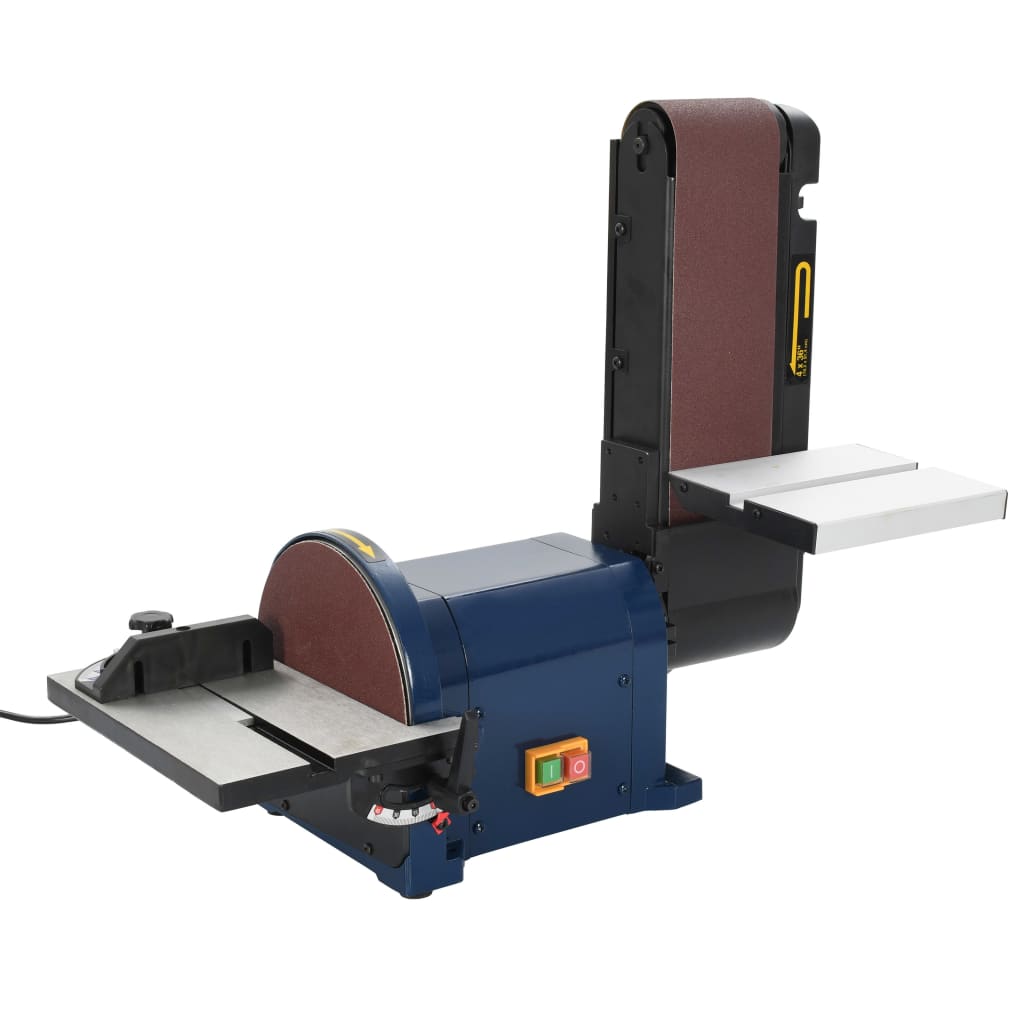
Belt sanders are designed to sand large surfaces quickly and aggressively, so they need durable sanding belts. Our range includes belts in different sizes and grits for working with both wood and metal. A quality belt delivers consistent results and a long service life, even under the most demanding conditions.
When restoring furniture or levelling large surfaces, a stable base is essential. A sturdy workbench (ID: 184) together with quality clamps and vices (ID: 215) keeps your workpiece firmly in place, allowing you to focus on sanding accurately and safely.
A classic choice that never lets you down. Sandpaper sheets are ideal for hand sanding with a sanding block or for use in finishing sanders. Rolls offer excellent value for money and let you cut exactly the length you need. This affordable sander accessory belongs in every workshop.
Ordering online is often more convenient than visiting a shop. You can take your time comparing products and prices, reading specifications and making sure you choose exactly the right grit and type for your project. Our online store offers everything from affordable options to professional-grade accessories, and you can quickly get the product you need from our warehouse. Good tool organisation (ID: 180) also helps keep your new accessories close at hand.
Here are answers to some common questions to help you make the right choice.
What does sandpaper grit mean (e.g. P80)?Grit indicates the number of abrasive particles per square inch. The lower the number (e.g. P80), the fewer and larger the particles, making the paper coarser and more aggressive. The higher the number (e.g. P240), the more and finer the particles, resulting in a smoother finish.
No. Make sure the disc diameter (e.g. 125mm or 150mm) and fastening method (usually hook-and-loop) are compatible with your sander. It’s also important to check that the dust-hole pattern matches to ensure effective dust extraction and extend the life of the disc.
Sanding dust builds up between the abrasive particles and causes clogging. To prevent this, make sure your machine’s dust extraction is working properly and the holes in the disc line up with the backing pad. When working with resinous or paint-covered materials (e.g. pine or old paint), use sandpaper with a special stearate coating that repels dust.
To remove old paint or varnish, start with a coarse grit such as P60 or P80. This removes material quickly. Once the old coating is gone, move on to finer grits (P120, P180) to smooth the surface and prepare it for a new finish.