For private customers
At checkout, product prices are automatically adjusted according to the VAT rate in your delivery country.

Christmas
Furniture
Home & Garden
Sport
Clothing
Mattresses
Watches
Electronics
Construction
Showing 1 of 1 products with selected filters
1 / 1
No products match your selected filters.
Every transaction, whether in a café, retail store or service outlet, ends with a receipt. This small piece of paper confirms the purchase for the customer and is an important accounting record for the business. That’s why a high-quality, reliable POS printer—or receipt printer—is an investment that supports a smooth workflow and a professional image. Here you’ll find a wide range of devices designed to meet the demands of today’s business environment, with fast printing, dependable performance and flexible connectivity.
Choosing the right device can seem complicated, but focusing on a few key features makes the decision much easier. Consider the specific needs of your business: do you need fast printing during peak hours, durability in a kitchen environment or portability for outdoor use? The right choice will help you find a device that balances price and functionality.
Most modern receipt printers use thermal printing technology. A thermal printer heats special thermal paper to create text and images. Its main advantages are speed, near-silent operation and no need for ink or toner—the only consumable is the paper roll. This makes thermal printers an ideal choice for most points of sale. Dot matrix printers are slower and noisier, but they’re useful in settings that require multi-part receipts or where the printer must withstand heat and moisture in a kitchen.
How the printer communicates with your POS system is crucial. USB is the most common option, offering a simple, reliable solution for a single workstation. If you need to share a printer across multiple devices on a network, for example in a restaurant kitchen, a POS printer with an Ethernet (LAN) connection is the best choice. Wireless options such as Wi-Fi and Bluetooth offer maximum flexibility. A Bluetooth receipt printer is an essential companion at markets, food trucks and anywhere else that uses mobile POS systems.
Print speed is measured in millimetres per second (mm/s). For high-volume businesses such as fast-food outlets and large supermarkets, every second counts, so consider a faster printer (200 mm/s or more). A standard-speed model is usually sufficient for smaller businesses such as boutiques and cafés. The most common paper widths are 80mm and 58mm. The 80mm width fits more information and looks more professional, while 58mm is a more affordable, compact option.

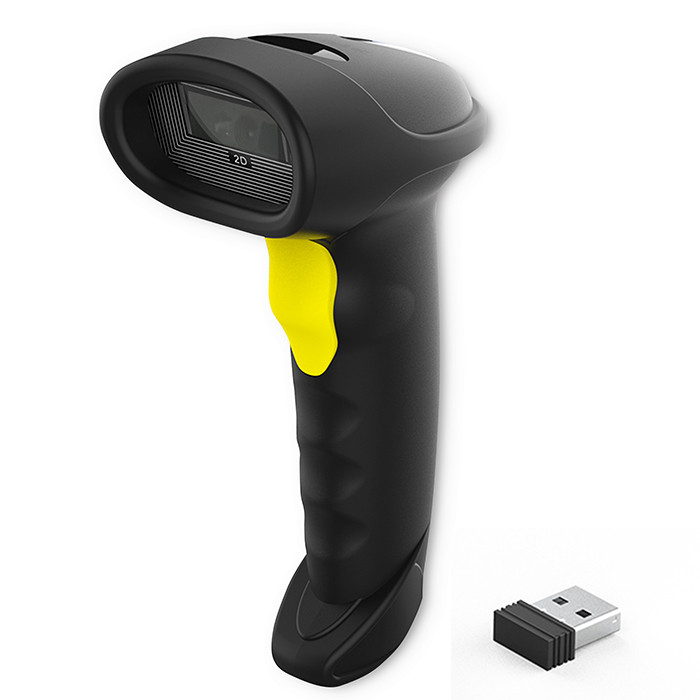
Modern receipt printers are used in almost every industry. In retail, they print till receipts and return receipts. In restaurants and cafés, they send orders to the kitchen and bar while printing bills for customers at the till. In logistics and warehousing, they’re used to print delivery notes and goods-received confirmations. Even service businesses, such as hair salons and auto repair shops, rely on fast receipts as part of good customer service. In many settings, these printers work alongside barcode scanners to create a complete, efficient point of sale.
We understand that every business is unique and needs the right solutions for its needs. Our goal is to offer you an excellent selection and a convenient shopping experience, wherever you’re based. Here are a few reasons to order your new POS printer from us:
| Question | Answer |
|---|---|
| What’s the difference between a thermal printer and a regular printer? | A thermal printer doesn’t use ink or toner. It creates an image by heating special thermal paper. This makes it a fast, quiet and cost-effective solution for printing receipts. |
| Do I need special paper? | Yes, thermal printers require special heat-sensitive paper. Make sure you choose paper with the right width and roll diameter for your printer model. |
| How do I connect a POS printer to my POS system? | The connection method depends on the printer’s interface. A USB printer connects directly to a computer or POS device. An Ethernet printer connects to a network router. A Bluetooth printer pairs wirelessly with your tablet or smartphone. Setup is usually simple and only requires installing the drivers. |
| Is a mobile receipt printer right for my business? | If your business is on the move—for example, if you provide courier services, cater at outdoor events or sell at markets—a mobile printer is ideal. It’s lightweight, battery-powered and connects wirelessly, giving you complete freedom. |