
0

Enterprise PCIe SSDs

Enterprise PCIe SSDs are designed to deliver maximum performance and unwavering reliability in the most demanding server environments. Based on the NVMe protocol, these drives offer ultra-low latency and exceptional endurance (TBW), which are essential for databases, virtualization, and high-performance computing (HPC). Choose the best server SSD for your business-critical applications.

17 / 17

Weight: 50 g
In stock
Data center SSD Samsung PM9A3 960 GB, U.2, PCIe 4.0

Data center SSD Samsung PM9A3 960 GB, U.2, PCIe 4.0

€790.19 2 pcs

SKU: MZQL2960HCJR-00A07

EAN: —

1
Weight: 170 g
In stock
Samsung PM9D3a 960 GB SSD, U.2, PCI Express 5.0

Samsung PM9D3a 960 GB SSD, U.2, PCI Express 5.0

€838.59 4 pcs

SKU: MZWL6960HFJA-00AW7

EAN: —

1
Weight: 113 g
In stock
SSD Samsung PM9A3 960GB PCIe Gen4 NVMe 2.5-inch

SSD Samsung PM9A3 960GB PCIe Gen4 NVMe 2.5-inch

€1083.80 88 pcs

SKU: 1353884

EAN: —

1
Weight: 160 g
In stock
SSD Samsung 960 GB PCI Express 5.0 NVMe, 2.5-inch

SSD Samsung 960 GB PCI Express 5.0 NVMe, 2.5-inch

€1093.75 20 pcs

SKU: 1465205

EAN: —

1
Weight: 210 g
In stock
SSD Sandisk DC SN861 1920 GB, PCI Express 5.0, U.2

SSD Sandisk DC SN861 1920 GB, PCI Express 5.0, U.2

€1426.60 28 pcs

SKU: 1444490

EAN: —

1
Weight: 113 g
In stock
SSD Samsung PM9A3 1.92 TB PCIe Gen4 NVMe U.2

SSD Samsung PM9A3 1.92 TB PCIe Gen4 NVMe U.2

€1907.37 22 pcs

SKU: 1334503

EAN: 196786227936

1
Weight: 231 g
In stock
SSD Western Digital Ultrastar DC SN655 3.84 TB, PCIe Gen4 NVMe, U.3

SSD Western Digital Ultrastar DC SN655 3.84 TB, PCIe Gen4 NVMe, U.3

€2102.90 1 pcs

SKU: 1439687

EAN: —

1
Weight: 130 g
In stock
SSD Kioxia CD8-R SIE, 3.84 TB, PCIe Gen4, U.2 15 mm

SSD Kioxia CD8-R SIE, 3.84 TB, PCIe Gen4, U.2 15 mm

€2299.07 7 pcs

SKU: KCD8XRUG3T84

EAN: 4582563857384

1
Weight: 209 g
In stock
Enterprise SSD Sandisk DC SN861 3840 GB, PCI Express 5.0, U.2

Enterprise SSD Sandisk DC SN861 3840 GB, PCI Express 5.0, U.2

€2490.95 8 pcs

SKU: 1444495

EAN: —

1
Weight: 90 g
In stock
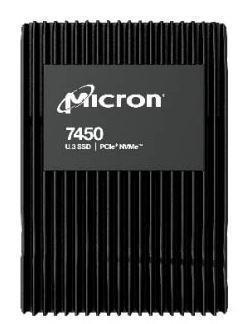
SSD Micron 7450 PRO 3.84 TB, PCIe NVMe, U.3

SSD Micron 7450 PRO 3.84 TB, PCIe NVMe, U.3

€2718.97 5 pcs

SKU: 1425226

EAN: 649528925664

1
Weight: 100 g
In stock
SSD Samsung PM9A3 3.84 TB PCIe Gen4 NVMe 2.5-inch

SSD Samsung PM9A3 3.84 TB PCIe Gen4 NVMe 2.5-inch

€3193.22 58 pcs

SKU: 1348930

EAN: —

1
Weight: 190 g
In stock
SSD Samsung PM1743 3840 GB PCI Express 5.0, 2.5-inch

SSD Samsung PM1743 3840 GB PCI Express 5.0, 2.5-inch

€3480.55 13 pcs

SKU: 1425936

EAN: —

1
Weight: 210 g
In stock
SSD Micron 7600 PRO 7.68TB NVMe U.2 (15mm) Enterprise Class

SSD Micron 7600 PRO 7.68TB NVMe U.2 (15mm) Enterprise Class

€4540.18 10 pcs

SKU: MTFDLAL7T6THG-1BP1DFCYYR

EAN: 649528949462

1
Weight: 188 g
In stock
SSD Kingston DC3000ME 7.68 TB, U.2, NVMe

SSD Kingston DC3000ME 7.68 TB, U.2, NVMe

€4758.17 5 pcs

SKU: 1452768

EAN: 740617347852

1
Weight: 117 g
In stock
SSD Samsung PM9A3 7.68 TB PCIe Gen4 NVMe U.2

SSD Samsung PM9A3 7.68 TB PCIe Gen4 NVMe U.2

€5154.70 27 pcs

SKU: 1343931

EAN: —

1
Weight: 300 g
In stock
SSD Micron 7450 MAX 12.8 TB PCIe NVMe U.3

SSD Micron 7450 MAX 12.8 TB PCIe NVMe U.3

€6381.26 2 pcs

SKU: 1409798

EAN: 649528926180

1
Weight: 170 g
In stock
SSD Solidigm D7-PS1030 Series, 12.8TB, U.2 15mm, PCIe 5.0 x4, TLC

SSD Solidigm D7-PS1030 Series, 12.8TB, U.2 15mm, PCIe 5.0 x4, TLC

€8739.35 4 pcs

SKU: SB5PH27E128TOP1

EAN: 840307304414

1

Enterprise PCIe SSDs: Peak Performance for Your Data Center

In today's data-driven world, storage speed and reliability have become cornerstones of business success. Enterprise PCIe SSDs represent the pinnacle of storage technology, designed specifically for data centers, cloud services, and enterprise infrastructure. Unlike consumer drives, every server SSD featured here is focused on long-term endurance under intensive workloads, data integrity, and stable 24/7 performance. These drives use the PCI Express (PCIe) bus and NVMe protocol to minimize bottlenecks and provide a direct path for data to the processor—essential for real-time analytics and managing large databases.

Ordering the right solution from our online store is easy, with a wide range of competitively priced products. If you're planning to buy a new drive, you'll find models here that are in stock and ready for fast delivery across Estonia. Our selection covers every need, from smaller capacities to solutions with tens of terabytes of storage.

How to Choose the Right Enterprise PCIe SSD

The right enterprise-class drive is an investment that must meet your specific technical and business requirements. The wrong choice can lead to unexpected costs or performance issues. Below, we outline the main criteria to consider when finding the best server SSD for your system.

Interface and Generation: PCIe Gen3, Gen4, or Gen5?

The PCIe generation determines a drive's maximum theoretical speed. While even the older PCIe Gen3 offers impressive performance, PCIe Gen4 is becoming the standard in modern servers, doubling data transfer speeds. For the most demanding workloads, such as artificial intelligence (AI) and machine learning (ML), a PCIe Gen5 enterprise SSD is the best choice, delivering unprecedented speed and throughput. When choosing, make sure your server's motherboard and server drive controllers support the selected PCIe generation to avoid performance loss.

Expert tips: Don't focus only on maximum read and write speeds. In enterprise environments, IOPS (input/output operations per second) and consistent performance under mixed workloads are often more important. Check the product specifications to see whether the drive is optimized for read-intensive or mixed-use workloads, so it matches your applications' profile.

Form Factor: U.2, U.3, or M.2?

Unlike the M.2 form factor common among consumers, enterprise drives often use specialized form factors optimized for server use.

  • U.2 (SFF-8639): This 2.5-inch form factor is a popular standard, offering a good balance between capacity and cooling options. U.2 drives are often hot-swappable, meaning they can be replaced while the server is running—essential for maintaining continuous operation.
  • U.3: A newer standard that is backward-compatible with U.2 while offering greater flexibility by supporting SAS, SATA, and NVMe protocols in the same bay. This simplifies infrastructure management and is a future-proof choice when configuring a new server or chassis.
  • M.2: A compact form factor used mainly as a boot drive or for caching in blade servers and compact systems where space is limited.

Endurance (TBW) and Reliability (MTBF): Critical Metrics

The most important metrics for enterprise SSDs are endurance and reliability. TBW (Terabytes Written) indicates how much data can be written to a drive over its lifetime before its memory cells begin to wear out. Enterprise drives have many times the TBW of consumer models. MTBF (Mean Time Between Failures) is a statistical measure that estimates a device's reliability in hours. The higher these figures, the more confidence you can have in your data's security. All the drives we offer come with a manufacturer's warranty.

Key Use Cases

Enterprise PCIe SSDs are designed for specialized, demanding tasks that conventional drives can't handle. Their capabilities shine in the following areas:

Workload Databases and OLTP
Workload Virtualization (VDI)
Workload AI, ML, and HPC
Workload Real-time data analytics

Placing an order online is quick and easy, allowing you to compare different models and find the right product for your budget and needs. We offer solutions in Tallinn and across Estonia, ensuring your order reaches you quickly and safely. Our goal is to offer the best value for money and ensure every customer finds a suitable, reliable storage solution.

Expert tips: When installing U.2 and U.3 drives in a server, make sure you have the right cables (e.g. SFF-8639) and adequate airflow. These high-performance drives can generate significant heat, so an effective cooling system is essential for stable operation.

Leading Brands in Our Range

Quality and reliability are paramount in the enterprise segment. That's why our selection includes only the best models from leading manufacturers such as Micron, Samsung, and Western Digital. These brands are known for innovative technologies, strict quality control, and firmware designed specifically for data centers. Their products, including the Micron 7450/7500/9550 series and Samsung PM series, have proven themselves in the world's most demanding environments, delivering stability and peace of mind.

Expert tips: When buying an enterprise SSD, always check the manufacturer's firmware support and availability of updates. Unlike consumer drives, enterprise SSD firmware is optimized for specific workloads, and regular updates can improve performance, compatibility, and security. A reliable manufacturer provides long-term product support as part of the broader server components ecosystem.

Why Customers Trust ZAZA

  • Always free delivery: Every order, regardless of size, reaches you with no additional shipping costs.
  • A wide selection backed by expertise: We've carefully selected only the best and most reliable enterprise-class products for our range.
  • Competitive prices: We offer fair prices on both individual components and larger projects.
  • Fast, reliable service: Our team is ready to help you find the right solution and ensure your orders are processed quickly.

Frequently Asked Questions (FAQ)

Here are answers to some common questions about enterprise PCIe SSDs.

Question Answer
What's the main difference between an enterprise NVMe SSD and a consumer NVMe SSD? The main differences are endurance (higher TBW), reliability (higher MTBF, power-loss protection), consistent performance under sustained workloads, and specialized form factors such as U.2. Enterprise drives are built to withstand 24/7 operation.
Can I use a U.2 SSD in a regular desktop computer? Yes, but you'll need a dedicated adapter (M.2-to-U.2 or a card installed in a PCIe slot) and the appropriate cable. Keep in mind that most desktop computers don't support U.2 hot-swap functionality.
Does an enterprise PCIe SSD need separate cooling? Yes, it's strongly recommended. High-performance drives generate a lot of heat, and overheating can cause performance throttling. In servers, case airflow provides adequate cooling, but densely packed systems may need additional cooling.
What does NVMe mean? NVMe (Non-Volatile Memory Express) is a communication protocol designed specifically for flash memory, such as that used in SSDs, and uses the PCIe bus. It's significantly faster and more efficient than older protocols such as AHCI, which was designed for SATA, delivering lower latency and greater parallelism.