


For private customers
At checkout, product prices are automatically adjusted according to the VAT rate in your delivery country.

Showing 2 of 2 products with selected filters
2 / 2

SKU: 1447406
EAN: 4895251648424

SKU: 1448019
EAN: 4895251639859
No products match your selected filters.
In today’s world, where we’re constantly connected and rely on electronic devices, access to power has become essential. A portable power station is your personal source of electricity, offering freedom and peace of mind in any situation. Forget noisy, polluting petrol generators—a modern power station is quiet, clean and ready to use indoors or outdoors. It’s an investment that keeps your devices running and life moving, wherever you are.
Choosing the right device can seem complicated, but by focusing on a few key specifications, you’re sure to find the best option for your needs. The price of a power station depends directly on its capacity and technology. Think about what you actually need so you don’t pay for features you won’t use—or end up short of power because you chose a device that’s too small.
Capacity, measured in watt-hours (Wh) or kilowatt-hours (kWh), is the most important specification. It determines how long the station can power your devices. A smaller station of around 200-500 Wh is ideal for a weekend hike, letting you recharge phones, laptops and cameras several times. Larger stations with a capacity of 1000 Wh (1 kWh) or more are powerful workhorses that can keep a fridge, lights and even some tools running during a power outage.
Output power tells you how powerful the devices a station can run at the same time. It’s important to distinguish between continuous and peak output. Many devices, such as fridges and power tools, need significantly more power for a short time when starting up. Make sure the station’s peak output can handle the demands of your most power-hungry device. A modern, powerful power station can also take on more demanding tasks.
Most affordable power stations use lithium-ion (Li-ion) batteries, which are lightweight and well proven. A newer, more durable technology is lithium iron phosphate (LiFePO4). Although these batteries are a little heavier, they offer significantly more charge cycles (often 3000+ vs 500-800), are more thermally stable and therefore safer. If you’re planning to use your device for the long term, especially as a home backup power source, a LiFePO4 power station is a smart choice.
The more types of ports, the better. Make sure the station has enough standard 230V AC outlets, USB-A ports and at least one high-output USB-C PD (Power Delivery) port for fast charging laptops and other modern devices. A 12V DC car outlet is also useful for accessories such as car fridges. Some models also offer wireless charging.
Modern power stations can be charged in several ways: from a standard wall outlet, a car cigarette lighter socket or solar power. Many EcoFlow models feature X-Stream technology, which enables ultra-fast charging from a wall outlet, often reaching 0-80% in just one hour. Solar power is the key to achieving true independence. Connect your station to compatible solar panels and you can charge it for free, in an environmentally friendly way, wherever the sun shines. Before you buy, make sure the station has a built-in MPPT controller to maximise the energy it gets from the sun.
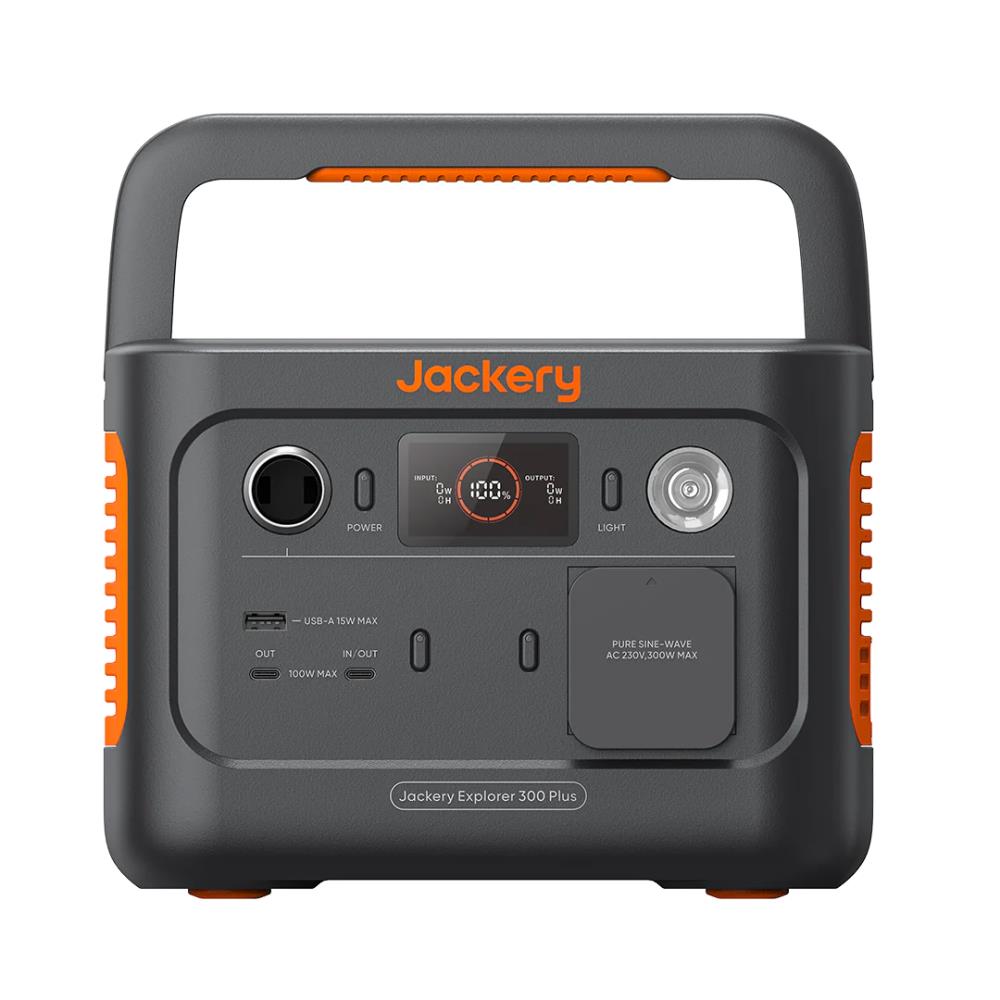


Our range covers every need, from small portable devices to large home energy storage systems. Here’s an overview to help you find the model that suits your lifestyle.
These lightweight (usually 3-7 kg), lower-capacity (200-600 Wh) stations are designed to be carried with you. They’re ideal for photographers charging camera batteries and drones, hikers who need light at night and a way to charge their phone, or beachgoers who want to listen to music and keep drinks cold. A small power station like this fits easily in your car and is always ready for an adventure.
This category includes stations with capacities of around 700 Wh to 2 kWh. They offer the best balance between portability and power. They’re powerful enough to run a small fridge, TV and lights at a summer house over the weekend, yet still portable enough to take to an outdoor event or use to power tools during repair work. Many also have a UPS function, making them a good choice for a home office and offering protection against short power outages, much like dedicated UPS devices for workstations.
With a capacity of 2 kWh or more, these stations are designed for more stationary use as a primary or supplementary backup power source for your home. They can keep essential devices such as a fridge, freezer, internet router, medical equipment and lights running for hours or even days. Many of these systems are modular, allowing you to add extra batteries and expand capacity as needed. This is the best power station for home use, giving you peace of mind in any situation.
Quality and reliability are essential when it comes to power stations. That’s why our range includes some of the most trusted manufacturers on the market.
Ordering the right device from our online store is simple and convenient. We offer a wide selection so you can find the right product, whether you’re looking for an affordable power station for short trips or a top-of-the-range solution to secure your household’s energy supply. With us, every power station purchase is transparent and secure.
| Question | Answer |
|---|---|
| Can I use a power station indoors? | Yes, absolutely. Unlike petrol or diesel generators, power stations produce no exhaust fumes and make very little noise, so they’re perfectly safe to use indoors. This is one of their biggest advantages. |
| How long does a power station battery last? | Battery runtime depends on two things: capacity (Wh) and the power consumption (W) of the connected devices. Most stations show the remaining runtime on the display in real time, based on the current load. The battery’s lifespan is measured in charge cycles—LiFePO4 batteries last significantly longer than standard Li-ion batteries. |
| What’s the difference between a power station and a power bank? | Although both store energy, the main difference is their power output and ports. A power bank is designed to charge small devices such as phones and headphones via USB. In addition to USB ports, a power station has 230V outlets, allowing you to power laptops, TVs, tools and even household appliances. |
| Can I charge a power station from my car while driving? | Yes, most models come with a 12V car charger that plugs into the cigarette lighter socket. It’s a convenient way to charge the station while travelling, although it’s usually slower than charging from a wall outlet. It’s one of many useful car accessories that give you extra peace of mind on the road. |